Validated Technology Platform
VAXIMM’s core technology uses a genetically modified vector as a carrier of genetic sequences designed to specifically target key antigens to activate the host immune system.
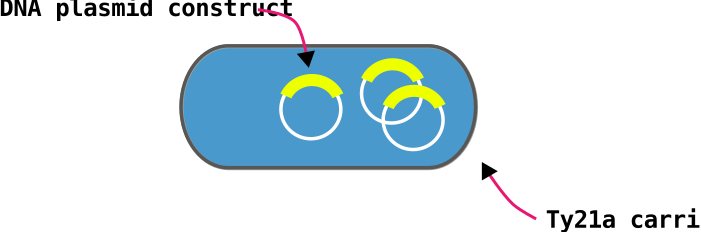
This engineered live-attenuated strain (Ty21a), originally known as Vivotif™, serves as a highly effective genetic delivery vector with an extensive safety profile as an approved oral vaccine against typhoid fever.
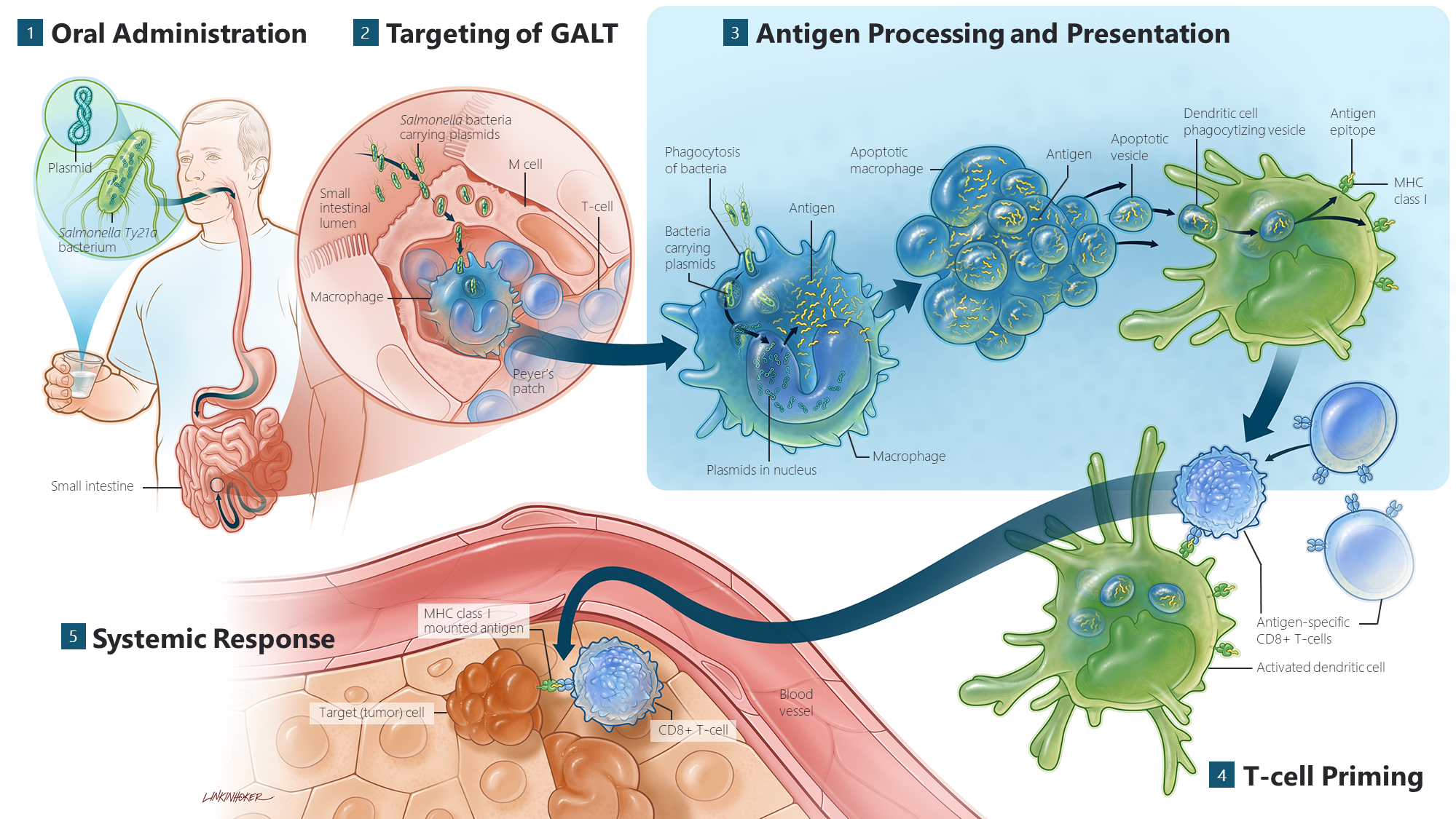
Priming and activating a systemic immune response via the Peyer’s patches in the gut allows for strong and persistent T-cell responses with a clinically proven safety profile suitable for continuous repeat administration. This novel technology platform is specific yet versatile, with the potential to target multiple conditions with a single oral vector. In addition, combination treatment regimens have been clinically assessed with several immunotherapies. Several key advantages of our technology platform are highlighted:
- Robust T-cell response demonstrated against many different antigens in both pre-clinical animal models and in humans
- Safe therapeutic doses allow for continuous dosing regimens suitable for continuous prime and boost administrations without raising anti-carrier immunity and adding a significant safety margin
- Platform versatility enables addressing multiple targets with a single treatment and can be easily combined with other immunotherapies
- Rapid & efficient platform offers high modularity (‘plug and play’) capability, low-cost and robust production process, and rapid development timelines from concept to the clinical stage
Unique Mechanism of Action
The gastrointestinal tract serves as the body’s largest immunological interface. Our approach targets the Gut-Associated Lymphoid Tissue (GALT) to prime specific immune cell subsets. By modulating these local pathways, we trigger a signaling cascade that extends far beyond the gut to address systemic pathology. Hover over the diagram below to explore the molecular and cellular transitions of this pathway.